Monday, 1 July 2019

Flowers, fungi et al

Al is often mentioned in references but no one even mentions who Al is. Is it Albert or Alice? It is one of life's great mysteries.


Another great mystery is how French Crane's-bill, Geranium endressii, came to be in Stefen Hill Pocket Park. It is a pretty thing, originally from the Western Pyrenees, and presumably a garden escape.


Geranium endressii hails from the Western Pyrenees. Here in Stefen Hill
Pocket Park. 1 July, 2019
It probably attracts the occasional insect although it had no such visitors when I photographed it today. Insects or not, as far as I am concerned it is very welcome.

Nothing in the pocket park is currently flowering more profusely than the patches of brambles. They are attracting lots of insects but it is a brave entomologist who wields a sweep-net over the thorny branches. Certainly I have badly snagged my net several times over the years. I did remove, with great care, a few tiny insects from the flowers but they will have to await examination under the microscope before I determine what manner of beast they be.


Rubus fruticosus is really a complex aggregate of micro-species.
Stefen Hill Pocket Park. 1 July, 2019
Bugs were doubtless abundant but again some, notably the cicadellids, will also need to go under the microscope. Some bugs were, however, obvious. I felt like a voyeur as I photographed this pair of Nettle Ground Bugs, Heterogaster urticae, going about their reproductive duties.


The Nettle Ground Bug is very common, and if they breed like this they will
be even more common! Stefen Hill Pocket park, 1 July, 2019
Mites are tricky. There are probably very few people around who can be regarded as competent acarologists but fortunately, for people like myself, many mites form galls which are more easily dealt with. The galls on this alder leaf are the work of Aceria nalepai*. The species is named after perhaps the most famous acarologist of all, the Austrian, Alfred Nalepa, who describe well over 400 species of these tiny spider relatives.


Aceria nalepai is a very common gall-former on alder.
Stefen Hill Pocket Park. 1 July, 2019


I had intended, as the blog title suggests, to mention the fungi I encountered on today's walk - but then I remembered my New Years Resolution not to allow myself to be diverted by these diverting organisms. So just the pictures then...

Honey Fungus is here almost certainly battening on a hidden, rotting
 tree stump.
And a Parasol Mushroom of some type.


And, er, something else.
Finally, as a coda, I popped into Daventry later and noticed another odd fungus...

Growing through a grille outside Lloyds Bank in the centre of Daventry
Again, I didn't attempt to identify it.


All very odd. And here perhaps a consequence of neglect by a de facto bankrupt local authority.


* Also - and perhaps more commonly - known as Eriophyes inangulis.


Sunday, 30 June 2019

The Cinnabar

Most people are familiar with the Cinnabar Moth, Tyria jacobaeae. No. Perhaps I should re-word that: most people of my generation are familiar with it. In my childhood it was abundant but now, although remaining common, I see relatively few examples.


It is a striking insect in its bold black and red colours. These are a warning: noli me tangere - touch me not!  Apparently the red colour is occasionally replaced by yellow but I have never seen this.


On of our most striking moths, the Cinnabar. Here on our allotment plot.
in early June, 2019


Although there are rare records from Coltsfoot, the caterpillar feeds almost exclusively on ragwort and groundsel, two plants which are laced with particularly toxic chemicals and which, despite silly alarmist stories* from people who are keen to drench our countryside with yet more pesticides, are generally avoided by livestock, rarely cause illness and almost never result in their deaths.


Cinnabar is probably best known as a source of mercury, but the moth is named after the oxide from which a red pigment was created and once used by artists in their paints.


On our allotment plot the moths have been flitting around for some weeks now but, as I try to keep the ground free of weeds, there has been no groundsel on which they could lay their eggs. Until today...


A solitary specimen was feeding on a groundsel seedling. Slim pickings indeed! (The seedling with a reddish stem directly to the left is Fat Hen.) Naturally I left the caterpillar undisturbed since the species merits the gardener's protection for the good work it does.
The first one of the year. Cinnabar caterpillar on our allotment,
30 June, 2019


The groundsel contains unpleasant toxins which are then stored in the caterpillar's body, hence warning colours, in this case black and yellow. They remain in the insect when it pupates for metamorphosis to the adult (imago) stage. As a consequence of the dangers to would-be predators both the larva and the imago are rarely attacked, although it is said that some cuckoo species will take the caterpillars.


* A parallel exists with stories spread by irresponsible journalists regarding the 'danger' of the False Widow spider which, although there may be people with a rare reaction to a bite,  generally causes no problem. I note that the Asian 'Killer Hornet' is now getting the same sensationalist treatment.


Wednesday, 26 June 2019

A walk in the park

Today has been cloudy, cool and breezy. Not a great day for late June but I was in Byfield so I decided to go for it - a walk in the pocket park.


A surprising number of insects were about, not visiting flowers but hanging about as though waiting for the sun to put in an appearance. Some died waiting...


Only the tattered remains of a moth, but enough to identify as a
 Hebrew Character. Byfield Pocket Park, 26 June, 2019
It was a Hebrew Character, Orthosia gothica, sometime called Setaceous Hebrew Character. Or half of it. But this ubiquitous moth was not on the list for the site. (It is now!)


A good percentage of the insects about were bugs - true bugs that is, not hospital bugs or computer software bugs. One decided that my hand would be a safe place to rest. And it was too, for having photographed it I blew it away.
Surprisingly, Grypocoris stysi has no common name, despite being a
common bug. Byfield Pocket Park, 26 June, 2019

It was Grypocoris stysi, aka Calocoris stysi, a rather attractive bug.  If you come across it in the garden then leave it: it feeds on aphids. It was on the list.

I normally find the hoverfly Volucella pellucens on flowers, but it too seemed to be waiting for some sun. The Pellucid Hoverfly is a common insect but it is surprising how often it crops up on Facebook, with people asking, 'What is it?' The bold white bar across the abdomen is frequently split into two halves by a black line.


The 'common name' of Volucella pellucens is the Pellucid Hoverfly, but in
fact no one really calls it that. Byfield Pocket park, 26 June, 2019

Black Knapweed, Centaurea nigra, otherwise known as Hardheads, was in flower but unusually it too had no insect visitors. It frequently attracts what are known as Picture-winged Flies - but not today.


Black Knapweed. Very common and valuable for the insects it attracts.
Byfield Pocket Park. 26 June, 2019


The only insect nearby was this tortricid moth. It may be Zeiraphera isertana, a very common moth found right across Asia and Europe from China to Britain. But this is a tricky group and I am not confident or experienced enough to claim it for the pocket park.


A tortricid moth - and that is as far as I got.


Anyway, it is not the most exciting or colourful insect and sometimes you just have to walk away. So I did.


Monday, 24 June 2019

With Chris and Lynda to Kentle Wood

The atmosphere was heavy and the sky a sullen grey. We were going to have rain. But Chris and I, together with our good friend Lynda Moran, are made of stern stuff and were undaunted. We had decided to pay a visit to Kentle Wood and, as Lynda and Chris are relatively unfamiliar with it, I tagged along.


Our first aim was to have a look at a flourishing patch of orchids that I'd first noticed about three years ago. Last year they were doing very well but today they proved a disappointment. I counted just seven spikes, half of last year's total, and it may be that the site is becoming too overgrown and shaded. Should I re-visit the area armed with a pair of secateurs?


Having walked perhaps three quarters of a mile with my companions I left them to walk and natter and strolled off to look more closely at the wildlife.


An ash tree was carrying a gall, rather smaller than a golf ball, caused by the mite, Aceria fraxinivora. The knobbly shape has led to this growth being known as the Cauliflower Gall.


Cauliflower Galls were common last year. This is the only one I've seen
so far in 2019. Kentle Wood, Daventry. 24 June, 2019
Hogweed is flourishing at Kentle Wood, as it is everywhere, and was attracting its usual loyal visitors. Among them was Cheilosia illustrata, unusual among Cheilosia species in having a dark wing patch. Bumble bees were frequent too, but I an loth to interfere with them.


Cheilosia illustrata is rarely (never?) found on any plants other than
hogweed. Kentle Wood, 24 June, 2019

There were not many butterflies about other than Meadow Browns and a few Ringlet, many of the latter being newly-emerged. This time last year Marbled Whites were abundant but today I saw none. (I saw just one yesterday at Sulgrave Farm.)

Trying to hide deep in vegetation. A ringlet shows the tell-tale pattern of
spots on the underside of its wings. Kentle Wood, 24 June, 2019
However there were plenty of two-winged flies about and so I returned home with lots of specimens to go under the microscope. 

Newly-emerged specimens of the Ringlet butterfly are generally very dark.
 Kentle Wood, 24 June, 2019
When I first began visiting Kentle Wood I found that, despite its simple linear layout, it was easy to take a wrong turn. But Chris and Lynda safely found their way back to their car.


Sunday, 23 June 2019

Sulgrave Farm

Sulgrave Farm, despite its name, is just slightly nearer to Culworth than its eponymous village. It was the gathering point for a meeting today of the Northants Diptera Study Group. I say 'group' but today only John Showers and myself turned up. It is, for many people, a remote and awkward-to-get-at sort of place.


The group had been asked to pay the farm a visit as the owners have been anxious to conserve wildlife on their land and are understandably keen to know just what they've got.


To encourage wildlife they have created some fine hay meadows. I say 'created' for they are probably not ancient and seem to be the result of sowing a suitable seed mix, perhaps from meadows elsewhere. They have succeeded admirably.


Hogweed dominates but yellow rattle, knapweed and perennial
sow-thistles are common too. Sulgrave Farm. 23 June, 2019
There were no orchids or other 'indicator species'  that I could see but the insect life was abundant, keeping John and me busy. Knapweeds were abundant but only a few, like the one illustrated, were in flower and made me wish that my botanical skills were less rusty.

I have a feeling that this shouldn't be here. Sulgrave Farm, near Culworth,
Northants. 23 June, 2019

It was the Hogweed, Heracleum sphondylium, which stole the show as far as insects were concerned. It is incredibly common yet always provides interest for the naturalist.

Bees were present on the flower heads in great variety.

Ashy Mining Bee, Andrena cineraria. on hogweed. Sulgrave Farm.
23 June, 2019
Beetles too, although most were tiny pollen beetles. This Spotted Longhorn, Rutpela maculata, although also common, was worth a picture, although what is not obvious from the photograph is that this is a mating pair, the female being virtually hidden from view.

Rutpela maculata was for many years known as Strangalia maculata.
Sulgrave Farm, near, Culworth, Northants. 23 June, 2019


As for bugs, huge numbers were present, although the only one I saw on the hogweed was the Dock Bug, Coreus marginatus.

Dock Bug was lured away from dock by the nectar feast available on
hogweed. Sulgrave Farm, near Culworth, Northants. 23 July, 2019
 .

Two other things brought my camera into action.
 
Field Maple commonly bears small red galls caused by the mite, Aceria myriadeum, but rarely do I see an example with the leaves so encrusted with the pustules.

Aceria myriadeum on the leaves of Acer campestris.
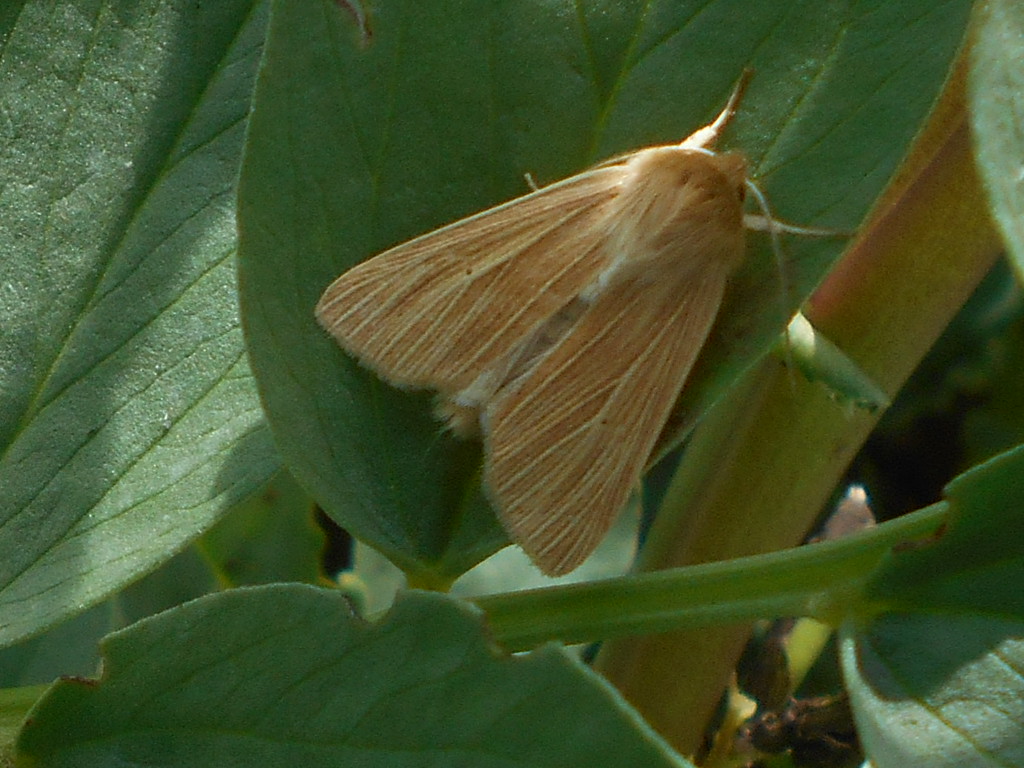
The second picture shows a Common Wainscot, Mythimna pallens, on field beans. It is a very common moth but posed so nicely that I hadn't the heart to ignore it.
Common Wainscot on field bean. Sulgrave Farm, Northants.
23 June, 2019

Red Kites and Common Buzzard wheeled overhead, yellowhammers called from hedgerows, skylarks soared. Not a bad day


Saturday, 22 June 2019

Solitary Tails

A couple of years ago I planted a Foxtail Lily in our back garden. Although I prepared the soil with care I was not wholly optimistic about the venture. They are regarded as tricky, and their other name of Desert Candles hints at their habitat in the wild.


In their magnificent book The Flora of the Silk Road, Christopher and Basak Gardner (See ref.) write of the conditions these plants occupy in the wild:  'Central Asia is the best place in the world to see these striking flowers'. They go on to provide more detail: '… high above the meadows of the Aksu-Dzabagly in southern Kazakhstan during June...in their thousands on stony slopes'. And again: ...truly abundant on areas of slatey rocks from the ancient Karatau Mountains...'


Hardly a description of conditions in a Daventry garden.


'Flora of the Silk Road' available from good booksellers (and therefore
ruling out W.H.Smith). A wonderful read.
Fortunately a handful out of the fifty or so species in the genus - and given the remote areas in which they occur, more may be found - are amenable to cultivation and our back garden plant appears to be happy. It is probably Eremurus x isabellinus, a hybrid between Eremurus olgae and E. stenophyllus.

Last year we had three flower spikes but this year there are six. Our
garden at Stefen Hill, Daventry. 22 June, 2019
The fleshy roots, resembling a spindly starfish, are brittle and need to be spread out carefully when they are handled. Their natural habitats suggest very well-drained, gravelly or gritty conditions, and that is what I tried to provide.
At close on six feet high they are dominating what passes for our back
border.

Forty years ago, when I first heard of Eremuruses (Eremuri?) they were only to be obtained from specialist growers, but garden centres are now making them more readily available. E. x isabellinus is of a distinctive salmon colour, difficult to fit in to a colour scheme but, to quote from Gone with the Wind, 'Frankly my dear, I don't give a damn.' And nor do bees; they love the flowers. Oh, and the word Eremurus comes from the Greek eremos, solitary, and oura, a tail. But of course you knew that.

Reference

Gardner, C and G. (2014) Flora of the Silk Road: An Illustrated Guide. I.B.Tauris


Friday, 21 June 2019

Steane House

Yesterday evening Chris and I, together with our friends Ann and John Pimm, joined members of the Boddington and District , on a visit to Steane House near Farthinghoe. The weather threatened from time to time and at one point we did have a sprinkling of rain but overall conditions were good. The house is very fine and the structure, together with the gardens, have had a huge amount of money poured into them. I'll refrain from socio-political comment.


I am always on the lookout for rare or unusual plants - a Pocket-handkerchief Tree perhaps or a Buckeye, but with one exception the plantings were safe and predictable. The novelty was a Bladder Nut, a Staphylea species. The Head Gardener said it was from North America and I didn't want to pursue the point but I thought all in the genus were Old World plants. The foliage was pinnate and I concluded that the species was Staphylea pinnata. Not only is the species from central Europe but it is naturalised in parts of Britain, such as south Lincolnshire. So not really an adventurous planting.


Staphylea pinnata in fruit. Steane House Gardens. 19 June, 2019
I was pleased to find a Fritillary in a border. It was Fritillaria imperialis, aka Crown Imperial and although the flowers were over, the curiously ridged fruit were worth a look.

The fruit capsules of Crown Imperials are rather striking.
Steane House Gardens, 19 June, 2019

Alas, the plant was under attack from Lily Beetles, Lilioceris lilii. Fritillaries are of course in the Lily family and, if anything, they attract these beetles more than true lilies.

Lily Beetles were present on the Crown Imperials.
I am always pleased to find caterpillars of the Mullein Moth, Cucullia verbasci, not because it is rare for it is very common, but simply because it is a handsome creature. It obviously feeds on mullein but also on water figwort, which is where I photographed my specimen. It is one of the few larger caterpillars which will feed on Buddleia.


Common, but always eye-catching, the Mullein Moth will feed on several
plants related to Verbascum.  Steane House Gardens. 19 June 2019
Only a few yards from this caterpillar I saw a black insect on the leaf of a yellow flag. It looked like a member of an insect family called the Stratiomyidae, and I was lucky enough to coax it into collecting tube. Once home I checked it under the microscope I found it was Odontomyia tigrina. Stratiomyids are known as soldier flies, and this particular species is the Black Colonel. It is not rare but I can't recall having seen a specimen before. I didn't photograph it. Damn!

There was not a lot else to set the pulse racing. A walnut tree  bore blister-like galls caused by the mite Aceria erinea. This is so common that an ungalled tree would have been more noteworthy!


Few walnut trees are without these galls formed by Aceria erinea. Steane
House Gardens. 19 June, 2019


This was a very worthwhile trip and I would thoroughly recommend a visit. But beware, the gardens are not always open and it pays to check the internet.