Friday, 10 May 2019

Noah's Ark abandoned


Over the last 48 hours we've had more than our fair share of rain. So heavy was the downpour at times that I considered that an ark could be needed. Not having been trained in ark building (arkeology?) I took my instructions from the 15th Century Chester Miracle Play:


                               One hundred cubetts it shall be longe,
                               And fiftie brode, to make yt stronge,
                               Of heighte fifty...
                                   Thus messuer it about.

Ever though I made a conservative guess about the length of a cubit, I realised it wouldn't fit in the garden, so I gave up on the idea.


As is oft the way the skies cleared, a dove came into the garden with a twig, and on Friday afternoon I made my way over to Stefen Hill Pocket Park.


The rain had been accompanied by some high winds and this Small (Cabbage) White, Pieris rapae, had received a bit of a battering, a forewing having been torn. The forewing can have two black spots, one spot or, as in this example, with a spot so faint it can barely be seen.
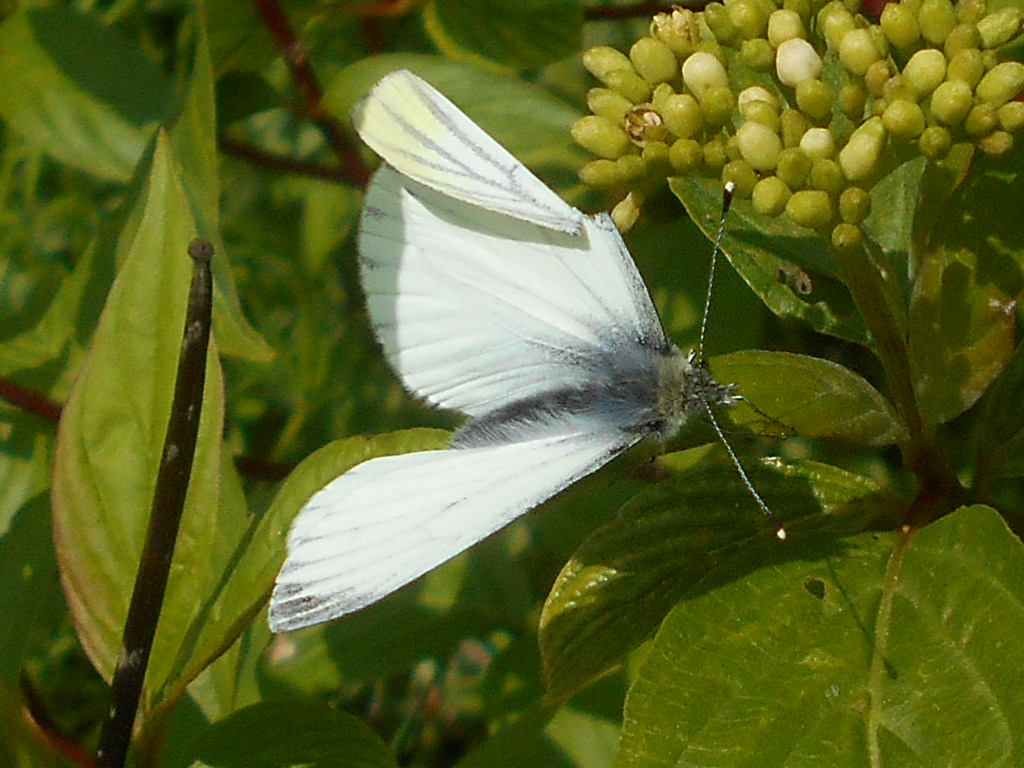
Small White displaying a war wound. Stefen Hill Pocket Park.
10 May, 2019
I ventured into an area of the park which, for some reason, I had barely seen before and was delighted to find maybe a couple of dozen plants of Cuckooflower, Cardamine pratensis. It other widely used name is Lady's Smock. Milkmaids and Fairyflower are more local names.

Cuckooflowers are still found here and there. One place is
Stefen Hill Pocket Park, Daventry. 10 May, 2019


A century or more ago it was probably one of Britain's commonest wild flowers and was a major food plant for the caterpillar of the Orange Tip butterfly, Anthocharis cardamines. Widespread drainage has led to a steep decline in the abundance of Cuckooflower and nowadays The Orange Tip probably relies more on the still-abundant Hedge Garlic. Given half a chance the caterpillars will eat any less-developed specimens for they are enthusiastic cannibals.

Too wet and cold to fly away.
In the wet grass I found a very bedraggled bee. I took it home for a closer examination and despite the wet pile on its thorax and abdomen I felt fairly sure it was a Field Cuckoo Bee, Bombus campestris. As it dried out the pattern of hairs on the abdomen became clearer and, with its 15 mm wingspan I became more convinced. However, I won't add it to the park list as I really am not experienced enough with Bombus species, especially wet ones! I released it later.


Cuckoo bees, as the name suggests are parasitic on other bumblebees, the queen cuckoo bee killing the queen bumblebee and laying her eggs in the nest of the victim. The young are then raised by the bumblebee workers.

Field Cuckoo Bee? I can't be sure.
Stefen Hill Pocket Park, 10 May, 2019
I have been disappointed that the pocket park contains no oak trees - or so I thought. As I left this under-visited area, partly concealed by a spreading Norway maple, I found a specimen. One reason I was pleased is that oaks are often afflicted by interesting galls, mostly the work of tiny wasps. I found none today but I'll monitor this tree over the next few months.


Tuesday, 7 May 2019

Testing, testing

This has certainly been a topsy-turvy spring. A fortnight ago the days were so hot that Chris and I had to leave the allotment before we got sunburnt, yet a few day later and I have been forced to postpone planting out our runner beans for fear of a frost! However, today is shaping up to be very pleasant.


I have been using the same SD card in my camera for several years now so, although it is still functioning, I am not sure that, in terms of colour, the pictures are as good as they could be. Results are particularly poor when dealing with blues and lilacs. With this in mind I treated myself (tret myself, as older Northamptonians would say) to a new card. When I visited the local (Stefen Hill) pocket park this afternoon I gave it a trial.


My first, not particularly challenging target was a caterpillar. It was a geometrid moth but beyond that I wasn't sure. Once home, a  trawl through my books showed that it was the larva of a Pale Brindled Beauty, Phigalia pilosaria. Well, the adult stage may be a 'beauty' but the caterpillar? Eye of the beholder and all that.


This Pale Brindled Beauty caterpillar was chomping away at both cherry
and maple leaves. Stefen Hill Pocket Park, 7 May, 2019
I strolled on seeking a sterner test. The pocket park contains a few horse chestnuts and I made a bee-line for those. Before long the leaves of these trees will be badly disfigured by the caterpillars of the Horse-chestnut Leaf Miner and I decided to have a look around.
 
Sure enough there were several of these tiny moths about. They only measure about eight millimetres in length and the colours would not provide the challenge I was looking for. Nevertheless I was tolerably pleased with the pictures in other respects.


Horse-chestnut Leaf Miner. Stefen Hill Pocket Park, 7 May, 2019
This moth, Cameraria ohridella, was first described as recently as 1986, from specimens found in the Balkans. Since then its spread has been frighteningly rapid, reminding us of the importance of biological controls on imports. The Indian Horse-chestnut, Aesculus indica, also grows in the pocket park. Fortunately this species seems to suffer little from the pestilential leaf-miner.

The flowers of the Indian Horse-chestnut are certainly lovely.
Stefen Hill Pocket Park, 7 May, 2019
On the subject of pests, I also noticed a problem with blackthorn (the shrub, not the cider). Its fruits are, of course sloes, gathered by some for flavouring gin. A few of the sloes were ripening, a process which takes several months, but the majority had a problem.


Blackthorn, Prunus spinose. Some of the fruits were developing
normally. Stefen Hill Pocket Park, 7 May, 2019 

They had been attacked by a fungus, Taphrina pruni, and the resultant distorted fruits are known as Pocket Plums. They are rather flattened on one side and the stones do not develop. Apparently some varieties of domestic plum can be affected, but I have never witnessed it. Being attacked by a fungus doesn't necessarily render things useless - think gorgonzola cheese -  but in the case of the sloes they are apparently a write-off.
I estimate that 80% of the crop had been affected.

I took a slight diversion on my way home (I had promised Chris that I'd gather some greenery) and was almost stopped in my tracks by a tree in Badby Road West. It was a Manna Ash, Fraxinus ornus, and was in full bloom.

Manna Ash growing in Badby Road West, Daventry. 7 May, 2019
I was well aware that it will grow in Britain although as a wild tree it is found in Mediterranean regions of Europe. What I hadn't known was that a specimen was growing so near to our house. Why, I wonder, is it not grown more often; it is a lovely sight.

The foam-like flowers are much visited by insects.
Surely we should grow more!
Like Sugar Maple, a sweet sap can be obtained by making a cut in the trunk and the resultant sugary substance was compared in medieval times to the biblical manna.


An interesting day. 


Thursday, 2 May 2019

Mustn't forget the allotment!

Several times in recent days dark clouds have suggested imminent rain but each case was an empty threat. A peck of March dust is worth a king's ransom, according to farming lore. That may be so but when the dryth goes on into April it becomes a problem.


With this in mind I visited the allotment today to give our thirsty plants a drink.


The broad beans were looking strong and healthy but they received a couple of cans of water.


Slightly overcrowded broad bean plants. But they seen to be doing o.k.
Our allotment at Drayton, Daventry. 2 May, 2019

Lettuces seemed happy but they too got a can of dihydrogen monoxide (DHMO) to sustain them.

These lettuces should soon be hearting up.
Last year our onions were rather disappointing so, although they also appeared to be flourishing, a couple of cans went their way too.

The onions are currently small but I'm hopeful of a decent crop in
late summer.
I had originally planned to put our runner beans in today but there is a slight chance of frost over the next two nights, so they'll have to wait. With this chilling threat in mind I put a light covering of soil over the emerging potato leaves. There followed five minutes of weeding and that was it for the day.

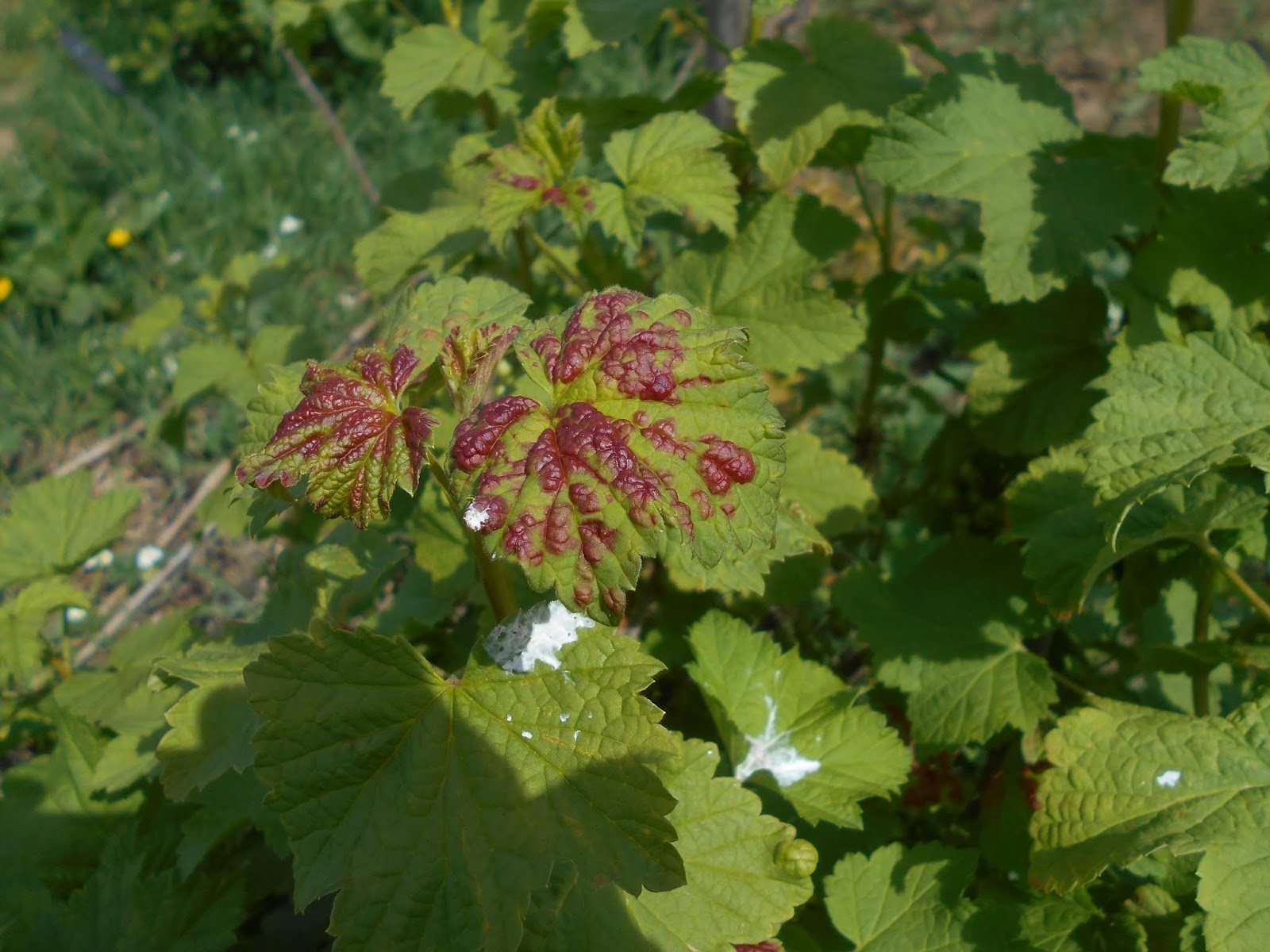
On my way out I noticed that some of the redcurrants on an adjacent plot had a problem. Cryptomyzus aphis is an aphid whose activities lead to the development of red, blister like markings on the leaves. I have noticed over the years that even severely affected shrubs may still yield a good crop, so it isn't a big issue.


Redcurrant Blister Aphid. I don't see it as much of a problem. But then it
isn't on my plot!
Once home I checked, for idle curiosity (I can be very idle at times) the NBN (National Biological Network) map for this aphid species. There were only 31 records. Of course it is found the length and breadth of Britain but it seems that few people bother to submit a report. Anyway, from now on there should be 32 records, as I reported this to the Wildlife Trust.

In the late afternoon the dry spell was broken and we received heavy rain.

I wonder how Jeremy Corbyn's allotment is doing.


Wednesday, 1 May 2019

Return to old haunts

Time was, a few years back, when I would make two or three visits a week to Byfield Pocket Park. Now my visits are far more occasional but warm sunshine lured me out there today and, as it turned out, I was glad I went.


We are well into the bluebell season and Byfield Pocket Park has its share. There are pale blue ones, white ones and some of an intermediate, rather wishy-washy mauve. Quite clearly garden escapees - Hyacinthoides hispanicus, the Spanish Bluebell. No native bluebells, or so I thought.
A mix of Spanish Bluebells. Byfield Pocket Park, Northants.
1 May, 2019


At that point I noticed that some were rather different. Unlike the Spanish Bluebell our indigenous species, Hyacinthoides non-scriptus, has a drooping inflorescence forming a one-sided raceme. The ones I had just noticed tended towards this one-sided arrangement and had flowers of a darker blue. I am reasonably certain these were hybrids, possibly meaning that the native bluebell had once been present but was now being hybridised out of existence. Maybe.
English-Spanish Bluebell hybrid? Byfield Pocket Park.
1 May, 2019

Red Campions, Silene dioica, were doing well and a number of young plants suggested they are spreading.
Red Campions appear to be spreading in the pocket park.
1 May, 2019

Vetches were doing well too, with Tufted Vetch, Vicia cracca, putting on a good display.
Tufted Vetch at Byfield Pocket Park. 1 May, 2019


Interesting though these plants were why, as I indicated in the opening paragraph, was I glad I went?


While stooping down to photograph the vetch an intriguing bug caught my eye, It was a species I didn't immediately recognise and I felt confident I'd never encountered one before. Once  home, a closer examination confirmed my suspicions. It was Rhopalus subrufus, not rare but, as far as I was concerned elusive, for I had indeed never seen one before.

Rhopalus subrufus.
It appears to be associated with St John's Wort, of which there is a patch some ten metres from where this insect had occurred but cranesbills, another food-plant, were also present.


All in all, I was rather pleased.


Tony White. E-mail: diaea@yahoo.co.uk

Sunday, 28 April 2019

Hannah

Storm Hannah has passed through with high winds, chilly conditions and some rain. Barely enough of the latter though; a morning visit showed that our allotment is in need of a good soaking, not just a couple of moderate showers. It did little damage. The ground had a scattering of tender young sycamore leaves across the surface but otherwise little harm had been done. I planted some lettuces, gave certain crops a good watering and returned home.


In fact the afternoon turned out to be very pleasant, with warm sunshine and very little wind. I didn't want to venture far so I predictably strolled over to the local pocket park.


Quite a few butterflies were on the wing including a female Holly Blue. A couple of days ago I had photographed the males: today it was the females who seemed more frequent.


Male Holly Blue at Stefen Hill Pocket Park. 25 April, 2019
Their dark-edged wings make them very distinct. Is it coincidence that I saw males around for a few days before any females? Were the males lying in wait? Certainly it is the case that some spider species mature before the females. Once mated the females will go away and seek a food-plant for their eggs. Obviously holly is used but ivy, dogwood and gorse are acceptable.

Female Holly Blue. Stefen Hill Pocket Park, 28 April, 2019

Again, with Orange-tip butterflies I noticed males before any females, but that just may be a consequence of their more striking appearance.


Male Orange-tip at Stefen Hill Pocket Park. 22 April,2019

The females lack the orange tips to their wings and they may be overlooked as another 'white' unless the mottled underside of the wings is visible. I should emphasise that both sexes have this wing mottling.

Female Orange-tip, same place. 28 April, 2019


The Green Shieldbug, Palomena prasina, assumes a sombre brown colouring for the winter to blend with the dead leaves under which it may hide. Now it has assumed its bright  summer green, and thus remains camouflaged.


This Green Shieldbug had assumed its summer colours.
 Stefen Hill Pocket Park, 28 April, 2019 


A tiny ladybird had me puzzled. It had only two spots but certainly wasn't the Two-Spot Ladybird, Adalia 2-punctata; the pronotum (the white, black spotted area behind the head) was all wrong. This pronotal patterning made it clear that it was a 10-spot Ladybird, Adalia 10-punctata. This is known to be a very variable species, with some forms having no spots at all.

A two-spotted Ten-spot Ladybird! Stefen Hill Pocket Park.
28 April, 2019


Ladybirds were to be seen everywhere. So far I have recorded five species and if I take a closer look at the pines at least one other may be present. This pair of 14-spot Ladybirds, Propylea 14-punctata, was doing its best to ensure that populations remain healthy, and Harlequin Ladybirds were similarly occupied.


14-spot ladybirds in copula. Stefen Hill Pocket Park, 28 April, 2019
I left, rather pleased to see that in this (relatively) chemical-free environment, at least some wildlife is flourishing.


Friday, 26 April 2019

A garden surprise

I visited the Stefen Hill Pocket Park earlier today but, apart from photographing Gooden's Nomad Bee, Nomada goodeniana, (easily mistaken for a wasp) there wasn't much doing. So far I have recorded three nomad bees from the park but this is the commonest species.


Gooden's Nomad Bee. Stefen Hill Pocket Park.
26 April, 2019
The more interesting find came when I arrived home. A striking sawfly was investigating a Pyracantha bush. Now I don't really do sawflies. They form a huge, complicated group of insects and there is no comprehensive key to the adults available.

However, this was a rather large specimen with striking black and gold bands across the abdomen. My initial thought was...Abia sericea. I posted a picture on Facebook and I was advised that it could be a member of the very similar genus Zaraea.

A Honeysuckle Sawfly on pyracantha. Our garden, Stefen Hill, Daventry.
26 April, 2019
With this clue I delved further into the matter and concluded that it was Zaraea lonicerae, the Honeysuckle Sawfly. Certainly there is honeysuckle in our garden.

Another view of the same insect.
This seems to be a relatively scarce sawfly with, for example, only one record for Leicestershire, so I'll forward the information to iSpot.

Thursday, 25 April 2019

From aphids to bees

I took a chance and visited Stefen Hill Pocket Park even though the wind was very blustery with lots of cloud cover. In fact I needn't have worried; insects were very plentiful even though the first located was not really an insect as such.


An orange-red bulge on the edge of a hawthorn leaf betrayed the presence of Dysaphis crataegi. This 'species' of aphid is in fact a complex group of closely related species requiring identification by an expert. I am content to leave it as D. crataegi. Part of its life is spent on hawthorn (the primary host) and it then moves to a secondary host, which can be any one of several members of the carrot family such as Cow Parsley, abundant in the pocket park.


The aphids are concealed, safe from birds, in this leaf roll.
Stefen Hill Pocket Park,Daventry. 25 April, 2019

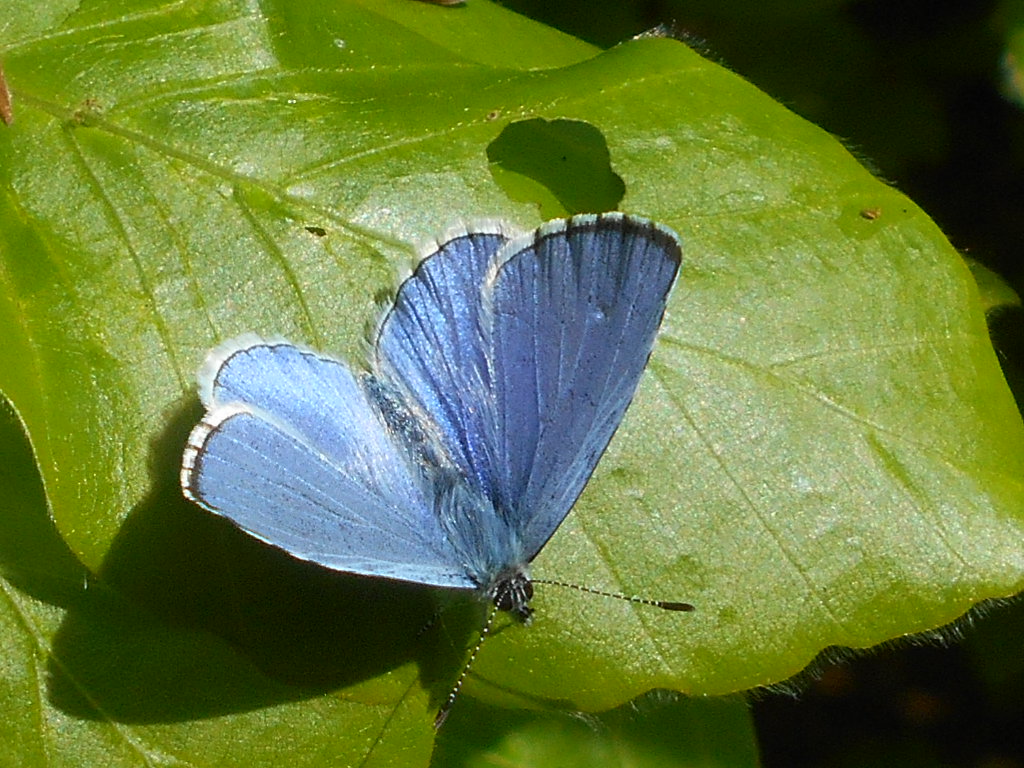
On a previous visit I had attempted to obtain a decent photograph of a Holly Blue butterfly but with little success.. This time I found a co-operative specimen that posed for me on a beech leaf. The Common Blue butterfly is far more likely to be found in meadowland but this Holly Blue was in a well-wooded area.


This Holly Blue co-operated by spreading its wings. Stefen Hill
 Pocket Park, Daventry. 25 April, 2019
I an always reluctant to harm bees so as far as possible I rely upon photographs. This specimen was visiting Horse Chestnut blossom and I am content that it is a Tree Bumblebee, Bombus hypnorum. This is a remarkable species in that it was first recorded in Britain as recently as 2001. By 2013 it had reached Scotland and had crossed to the Isle of Mull by 2014. Nowadays it is common in parks, gardens, allotments, hedgerows, orchards and so on.

A Tree Bumblebee pays a visit to Horse Chestnut flowers.
Stefen Hill Pocket Park, Daventry. 25 April, 2019

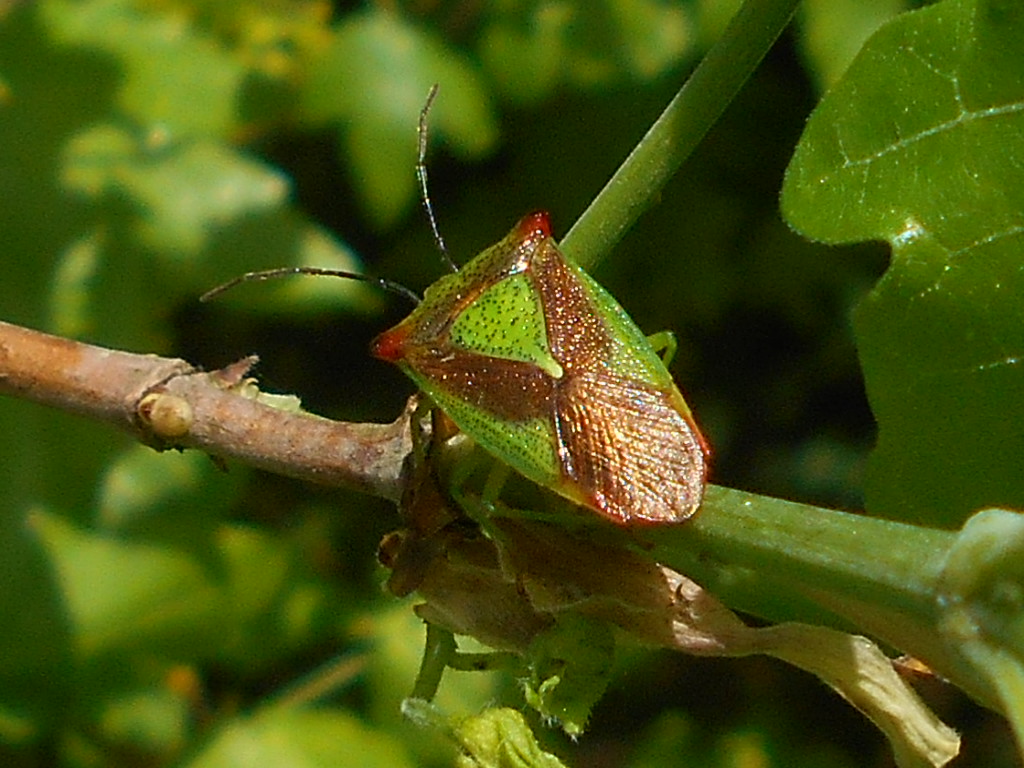
A month ago the Hawthorn Shieldbug was nowhere to be seen - or at least, I couldn't find it. Now it is to be seen everywhere although its camouflage is very effective and it can easily be overlooked.
The pointed 'shoulders' of the Hawthorn Shieldbug help to make it
easily recognisable. Stefen Hill Pocket Park.. 25 April, 2019
It is associated not just with hawthorn but many of its relatives such as rowan, cotoneaster, whitebeam and so on - all members of the Rose Family, Rosaceae.


A doubtful day turned out to be rather productive and the list of species known from the park now approaches the hundred mark.


Tony White.  E-mail: diaea@yahoo.co.uk