Sunday, 4 February 2018

Ash, birch and spruce

The Norway Spruce tree, Picea abies, is not native to Britain but is grown here in large quantities. Tens of thousands, if not more, are grown each year as Christmas Trees and plantations of them supply valuable timber for a number of uses. I wrote a little about it in my blog of 23 January this year when discussing Woodford Halse. Although I include a photograph it is too familiar a tree to require further discussion at this point, other to say that its timber is very widely used in construction work and is referred to as 'deal'.

Norway Spruce in Great Central Woodland, Woodford Halse.
23 January, 2018
The Norway Spruce is an alien but the Ash, Fraxinus excelsior, is not only a native tree but here in the English midlands is extremely common, almost to the point of being a weed. A member of the Olive Family, Oleaceae, its readily-available timber is excellent in many ways, especially where springiness is important. The grain is generally straight and responds well to steaming; both may be factors making it suitable for bending into various curves.
Young ash trees in Stefen Leys Pocket Park. 4 February, 2018
I find it is reasonably easy to identify its silhouette in winter and yet it is not easy to explain why. Of course, if the very distinctive soot-black buds are examined then all doubts are promptly banished.
Ash trees have unmistakeable buds. Stefen Leys. 4 February, 2018


The Silver Birch, Betula pendula, is familiar to those of an older generation - myself included - for its use in punishing errant individuals:


                                     And now the birchen-bud doth spring,
                                     That makes the schoolboy cry...


                                           Beaumont and Fletcher: The Knight of the Burning Pestle


Indeed, the generic word Betula is apparently derived from the Latin word meaning 'to beat'. (Ref 1) The gardener cherishes the trees for their grace and I feel that more use should be made of birches as a street tree. (A group of lime trees in Woodford Halse have been pollarded over the last month or so to produce objects of grotesque ugliness.)Industrially the rather light timber is valued particularly for turning and was one used widely in the furniture industry. So, Norway Spruce, Ash and Birch - in what way are they linked? When, immediately before World War 2,  a very fast fighter-bomber was being conceived, the three timbers expressly demanded by the designer, Geoffrey de Havilland, were ash, spruce and birch (for minor trimmings other timbers were used in small quantities). Balsa, Ochroma pyramidale*, was also employed but I wasn't prepared to go to Ecuador, currently the world's major supplier, for a photograph.
Birch trees in Stefen Leys Pocket Park. Daventry.
4 February, 2018

Although I am by no means an aircraft buff, I believe that this immensely successful plane was, for a while at least, the fastest aircraft in the world. Wood is an astonishing material.


* Curiously, this soft and amazingly light timber, is technically a hardwood, belonging to the Kapok Family, Bombaceae.


References


1.  Tudge, C. (2005) The Secret Life of Trees  Penguin Books


Tony White:  diaea@yahoo.co.uk.

Thursday, 1 February 2018

Will I never learn?

Off to Foxhill Farm this morning for a look at its western parts. The temperature according the car thermometer was 4 degrees but I rapidly realised after getting down to work that, that with a biting wind, it was feeling far colder. A short burst of hail (or was it gritty snow?) made things thoroughly unpleasant. So bitter were the conditions that I didn't linger but set off home after twenty minutes or so, plunging my hands into a bowl of warm water to bring life back into them.
Right, that's the whinge over. So what happened?
It was the first time I had driven to the farmhouse itself, turning off the A361 and following a metalled drive for maybe five hundred yards before parking in the shelter of a barn. I had already passed a stretch of newly-planted woodland of, I would guess, 2500 square metres, and it seemed to be a good place to start.
A newly-planted woodland stretched along the side of the drive.
Foxhill Form, near Badby. 1 February, 20118
A quick check showed that oak, birch, hawthorn, dogwood and hazel were present but a more thorough survey will probably reveal other species. The hazels were bedecked with catkins and Marble Galls caused by the tiny wasp, Andricus kollari were present on the oak. One hawthorn bush was already unfurling its leaves but although the sun was shining brightly it was far too cold for photosynthesis to be taking place.
The oaks bore Marble Galls. Foxhill Farm. 1 February, 2018
I got to work rummaging through the leaf litter and grass 'thatch' beneath the trees but, understandably given the immature state of the woodland, there was little to be found. The spiders, Neriene clathrata and Lepthyphantes (Tenuiphantes) tenuis were present, together with a rove beetle, Tachyporus hypnorum. All three are very common to the point of being ubiquitous and I had already recorded them from the eastern parts of the farm.
Hazel catkins were tossing in the brisk wind. Foxhill Farm.
1 February, 2018
I will return for another look at this woodland but not until the conditions are a wee bit more auspicious.


Tony White  E-mail: diaea@yahoo.co.uk


Tuesday, 30 January 2018

The Yew Tree (amended)

In a recent blog ('Fooled again', 25 January) I had stated that the Scots Pine was one of only two native evergreen trees in Britain. Wrong! I had unaccountably overlooked what is arguably the most interesting of them all, the Yew, Taxus baccata. A multitude of myths, legends and superstitions are associated with this tree and anyone so inclined can find many of them recounted on the internet. The most outrageous legend I know concerns an ancient yew in Scotland. Apparently a label affixed to it suggests that the young Pontius Pilate may once have sat in its shade (Ref. 1). (It seems that Britain liked to create links with biblical characters; one recalls the belief that Joseph of Arimathea accompanied Christ on a visit to Glastonbury.)
Neither a flowering tree or with any obvious cones the yew is nevertheless grouped with the conifers even though its ovules are borne singly and therefore do not form cones. It is not regarded as native to Northamptonshire but everyone is familiar with it through its presence in churchyards. I gather it even has its own local common name - 'Snotball' - apparently for the form of its berry-like fruits (Ref. 2). Despite being an alien in our county we can boast one of Britain's finest specimens. The wonderful tree in Helmdon churchyard, about which I blogged some five years ago, is reputed to be 1700 years old, but it must be said that ancient yews are very difficult to date. (A branch of a yew in Borrowdale was torn off during a storm in 1998; this was shown by dendrochronology to be 1500 years old - but this was just a limb and the tree itself may be much older. (Ref 4))
Can we be sure that Yew is not native in Northamptonshire? Briefly, no, but it seems very unlikely. Druce (Ref. 3) described it as 'a doubtful native of the county'. I suppose it depends how far you go back. After all, Norway Spruce was native to Britain before the last Ice Age wiped it out - but there is no point in pursuing that line of thought. In short, we cannot be certain.
I was reminded of this during a visit to Byfield earlier today. There are yews in the churchyard there but most of them are examples of the upright Irish Yew, Taxus baccata cv. fastigiata.
A fastigiate yew in Byfield Churchyard. 30 January, 2018
Pleasingly these Byfield yews do bear fruit and the numerous young yew trees in Byfield Pocket Park are quite likely to be their bird-sown progeny.


References


1. Quoted in Tudge, C. (2005) The Secret Life of Trees  Penguin Books


2. Gent, G and Wilson, R (2012) The Flora of Northamptonshire and the Soke of Peterborough. Botanical Society of the British Isles


3. Druce, G.C (1930) The Flora of Northamptonshire  Buncle & Co


4. Pankhurst, M., A'Hara, S. and Cottrell, J. (2015) The Fraternal Four British Wildlife, Vol 26 p. 178

Monday, 29 January 2018

Tussocking

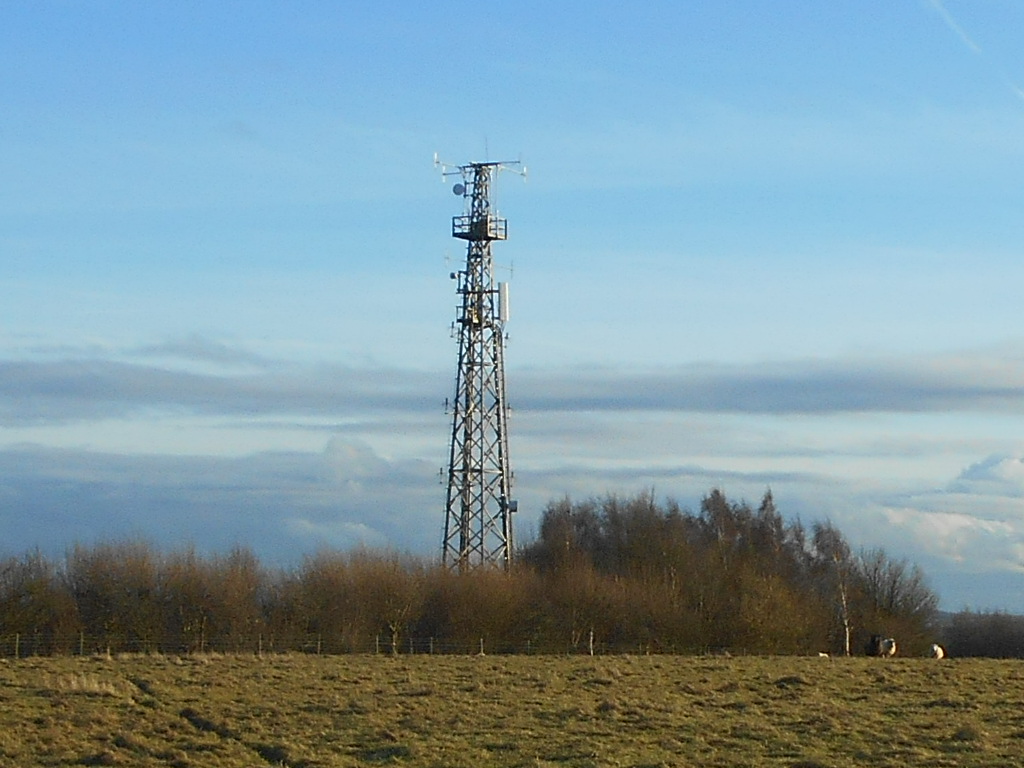
The rain of the morning faded away to give an afternoon of bright sunshine so I seized the chance to visit Mat Moser's land, specifically the area around the radio mast on Newnham Hill. It is part of the air traffic control system for the U.K. and. with the summit of the hill at 201 metres it is well positioned.
Air Traffic Control beacon, Newnham Hill. 29 January, 2018
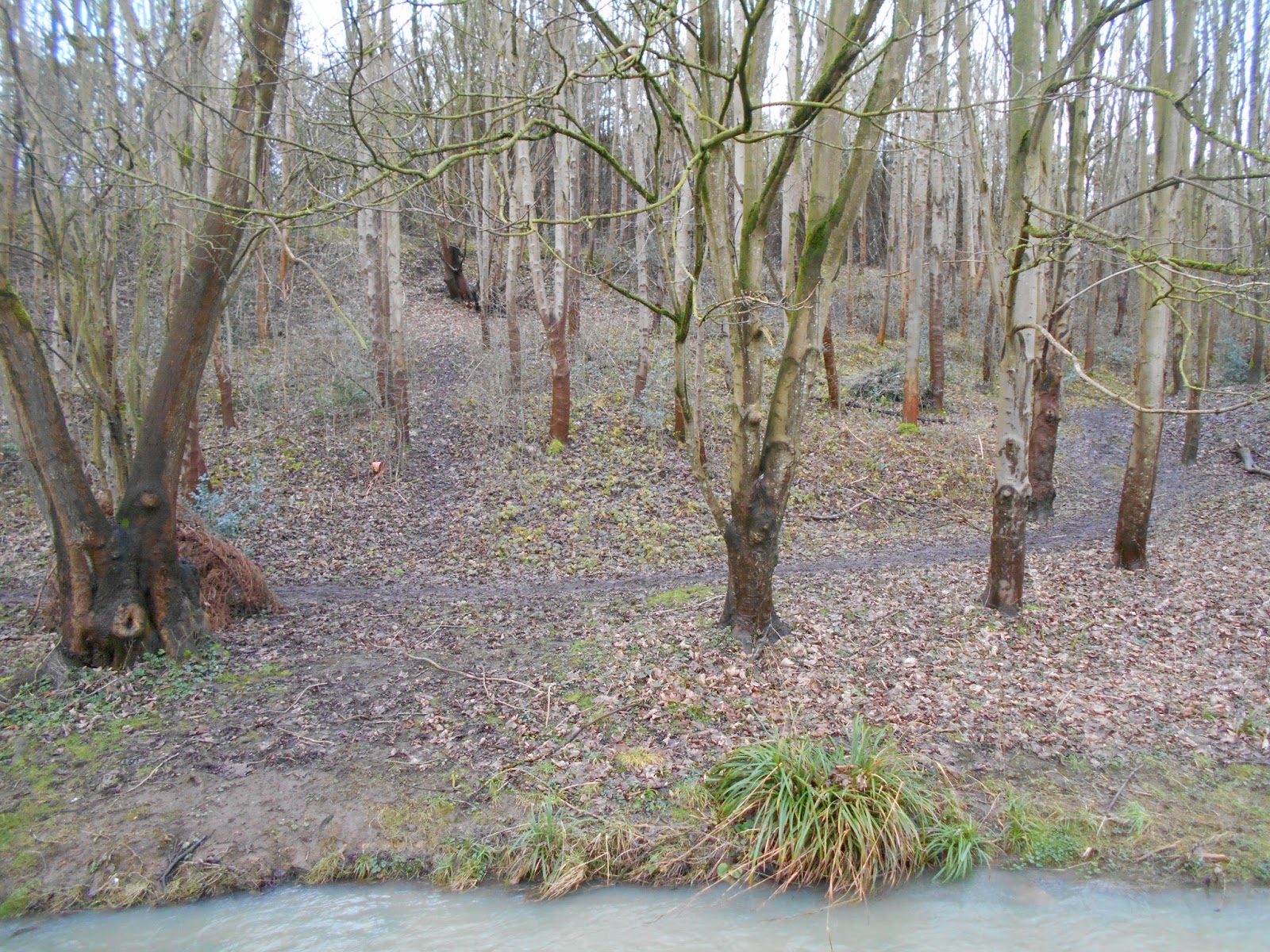
In fact, after a quick look around I decided that the habitats on offer were not of great interest (the woodland shown in the photograph was fenced off and not part of Matt's land). I decided instead to investigate some grassy tussocks near to the windmill. While I prepared my surveying kit the local sheep came over to survey me.  After several visits are they now getting to recognise me?
Hi Tony! What are you up to? Sheep on Newnham Hill.
29 January, 2018
I explained what I was planning to do and they turned away in disgust, at least one depositing a steaming little parcel near to my feet. 'Spiders? Baa! Humbug!' Despite feeling a little hurt by their attitude I persevered and was soon dismembering likely-looking sods. 
Spiders? Wow, how exciting - not!
I wasn't anticipating great invertebrate riches but was moderately pleased by my haul. In July I'd have been disappointed but the total is at least growing with today's findings raising the number of species to 36 with the addition of two more beetles, a ground bug and a couple of spiders.

Sunday, 28 January 2018

Harbingers of spring

January is almost over and I tell myself that spring is almost here. But realism and experience also tell me that winter is far from done and it could yet deliver a nasty bite. Nevertheless a brilliant morning sun drew me into the garden and showed me a few early treasures.
A small clump of Cretan Crocus, Crocus sieberi, has been in bud for a few days but today it finally burst open, Ishtar-like, to flaunt its naughty bits.
In our front garden on Daventry's Stefen Hill, Crocus sieberi has plucked up
courage to bloom. 28 January, 2018


Not to be outdone, a few paces away a little patch of Crocus chrysanthus, was also in bloom. Both it and C. sieberi have quite a wide range in the Balkans, Turkey and Greece but only the latter makes if as far as Crete, where apparently it can be very common.
Not to be outdone, Crocus chrysanthus has followed suit...


Occupying a similar range, but going further north-east into Russia, is Iris reticulata. It has no common name but is sometimes referred to as the 'Netted Iris'. Certainly the fibrous sheath covering the bulbs is reticulate (netted) but this delightful plant really deserves a more attractive name.

...and Iris reticulata joins the show. Our front garden at Stefen Hill, Daventry.
28 January, 201
Oddly enough crocuses are members of the Iris Family, Iridaceae, so clearly the three plants featured are, despite considerable differences in outward appearance, closely related.
Quite unrelated are Heartsease pansies. These pop up in the rock garden in considerable numbers and, although I have to weed many of them out, they are very welcome. A few, battered by biting winter winds are in flower but the chances of an insect visitor are remote although bumble bees may, later in the year, pay a visit.
Heartsease pansies are blooming too, here pushing through a patch of
 Sea Heath, Frankenia laevis

In fact pollination is unnecessary for violets and pansies also bear cleistogamous flowers. These are non-opening, self-pollinating flowers. This is an advantageous strategy in unfavourable conditions for neither petals nor nectar need to be produced and only a small amount of pollen will suffice - a saving of some importance.

Heartsease. Viola tricolor, is a native British species but is very rare as a genuinely wild plant in Northants although it may, of course, occur as an escape from gardens on waste ground. It has a host of common names from the simple Herb Trinity to Kiss-me-at-the-garden-gate plus at least half a dozen more. The herbalist, Nicholas Culpeper, recommended it for the treatment of 'venereal heart disease' but the name Heartsease generally has more romantic connotations.

It is one of the parents of our common garden pansies. 


Thursday, 25 January 2018

Fooled again!

I never seem to learn! Once again I was lured out by brilliant sunshine, only to find that it was a distinctly cold day, made chillier by a brisk wind. Almost inevitably I visited Matt Moser's land but this time heading for Newnham windmill. It sits atop a steep hill and despite the cold I was puffing and blowing by the time I got there. A look across the land to the west made it clear what a task lies ahead of me. If I've got four active years ahead of me I'll only have scratched the surface.
Looking west across Matt Moser's land. 25 January, 2018
On my approach I passed a dead Sorbus species. The only Sorbus native to Northants is the Wild Service tree, Sorbus terminalis, a species largely confined to limestone areas and therefore unlikely to be found in the Daventry area. This skeleton of a tree was unidentifiable to species but had clearly been planted for amenity anyway.
Turkey-tail gets to work on a dead Sorbus tree. 25 January, 2018
It was already displaying fungal attack, rather predictably by Turkey-tail, Trametes versicolor.
Clinging to the side of the hill, slightly below the windmill, is a woodland, edged with a line of Scots Pine, Pinus sylvestris. The woodland is probably planted but the Scots Pine is native of course (although not in Northants), one of Britain's only two native evergreen trees - the other being holly (I did not include box, but since writing this blog I have found evidence that it too may be native.). Much of the deciduous woodland seems to consist of sycamore and there is oak too, but I'll wait for the foliage to develop before establishing just what trees are present.
Pines form a border to a wooded area adjacent to Newnham Windmill.
25 January, 2018
I spent most of the morning rummaging through the leaf litter and ending up with a decent haul of invertebrates, some 75% of which were spiders. Many thousands of snowdrops were present, but although some were in flower others were  perhaps 2-3 weeks behind, suggesting that more than one strain is present. They will, of course, also have been planted.

An exercise in futility? Snowdrop flowers await a passing bee.
25 January, 2018
In the event I recorded six more species: one earwig, a couple of true bugs and three spiders, including the tiny Diplocephalus permixtus - not by any means a rarity but I haven't taken a specimen for some years.
All in all, not a bad session.

Tuesday, 23 January 2018

Woodford Halse - an odd village

Woodford Halse is a strange place, rather difficult to categorise, and is almost large enough to be called a town. Indeed it would surely be a town by now had the Great Central Railway not disappeared from the area (though arguably the G.C.R. still exists around Loughborough in Leicestershire). Today I visited Woodford with Chris as she had a short appointment there.
Once a small village of 61 houses it grew rapidly with the formation of the Great Central Railway, for it was chosen for the site of a very large motive power depot - invariably called a 'shed' - which in 1948 housed 56 locomotives. With the closure of the railway Woodford Halse was stopped in its tracks but for a settlement of its size it still retains a remarkably wide range of retail outlets.
The railway still retains an influence on the village in many ways. The railway track passed through the village on a high embankment, now covered with trees, and may become - with proper management - an increasingly important site for wildlife. A large proportion of the trees are sycamores but many species are happy to make use of them.
Woodland now covers the embankment leading up to the site of the 'shed'.
Woodford Halse, 23 January, 2018
The embankment was partly necessitated because at this point it crossed the River Cherwell (pronounced Charwell), an important tributary of the River Thames. The river when I visited it today was swollen by rain and melting snow although it is normally just a broad stream.
The youthful River Cherwell had been swollen by recent rains.
Woodford Halse, 23 January, 2018
The low-lying wetland adjacent to the river has recently been developed into an interesting feature called Great Central Woodland. It has attractive walks, although I am bound to say that in late January it wasn't looking at its best.
'Waste' land now forms an attractive habitat.
As for the village, many of the older parts, contemporary with the railway boom, consist of narrow roads bordered by terraces of small houses, fine for the late 19th Century railway worker but increasingly unsatisfactory for the 21st Century. These houses are much what might be found in a large industrial town and look incongruous in a village.
Back streets in Woodford Halse have the look of those in a large town.
23 January, 2018
For some reason I was moved to photograph a Norway Spruce, Picea abies, in the wetland. area. It is not yet a large tree, being only around fifteen feet tall, but is probably growing rapidly and it is worth noting that Europe's tallest native tree is a Norway Spruce. It was perhaps planted out some years ago as a redundant Christmas Tree. The idea of Christmas Trees seems to have originated in Prussia and the word spruce is derived from 'Prussia' via the related word 'pruce'.
A Norway Spruce is a neat feature of the Great Central Woodland.
23 January, 2018
By this time I felt that Chris would be ready to be gathered up so I scurried up into the main street, glad also for an excuse to get out of the drizzling rain.


Tony White. E-mail: diaea@yahoo.co.uk